Dom St. Kilian (cathedral)
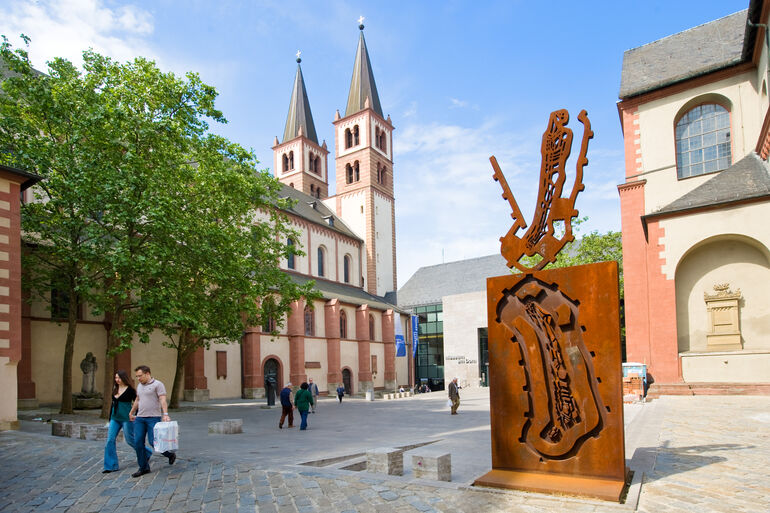
A principal work of German architecture of the 11th and 12th centuries. The construction started in 1040, the East towers were built in 1237. The interior was decorated with very ornate Baroque era stucco from 1701-1704 by P. Magno. The Cathedral burned out in 1945. After rebuilding was completed the consecration took place in 1967.
Added to the transept is the Schönbornkapelle Chapel, the burial site of the Prince Bishops of the House of Schönborn and an important creation by B. Neumann with fresco by R. Byß. On the South end, cloister with sepulcher; modern glass windows by G. Meistermann.
Monday – Saturday: 10 am – 5 pm, Sundays and holidays 1 pm – 6 pm
Daily guided tours (in German only) from April 11 to October 31, 2023 at 12:30 pm.
Fee: € 5 per person, reduced € 4
Duration: 1 hour
Tickets: at the "Dominfo" on the square in front of the cathedral or directly from the tour guide
Meeting point: Menora (seven-armed candelabrum near main entrance)
Note: Before each guided tour you can join a meditation with organ music, starting at 12:05 pm.
The cathedral is accessible for wheelchair users.
Information:
Dominfo Würzburg
Domstraße 40
97070 Würzburg
Phone +49 (0) 931/38 66 29 00
E-Mail: information.dom@bistum-wuerzburg.de
www.dom-wuerzburg.de